We are consecrated religious women called to serve and love God freely and inclusively; to possess nothing so as to share everything; to listen so as to discern God’s will.
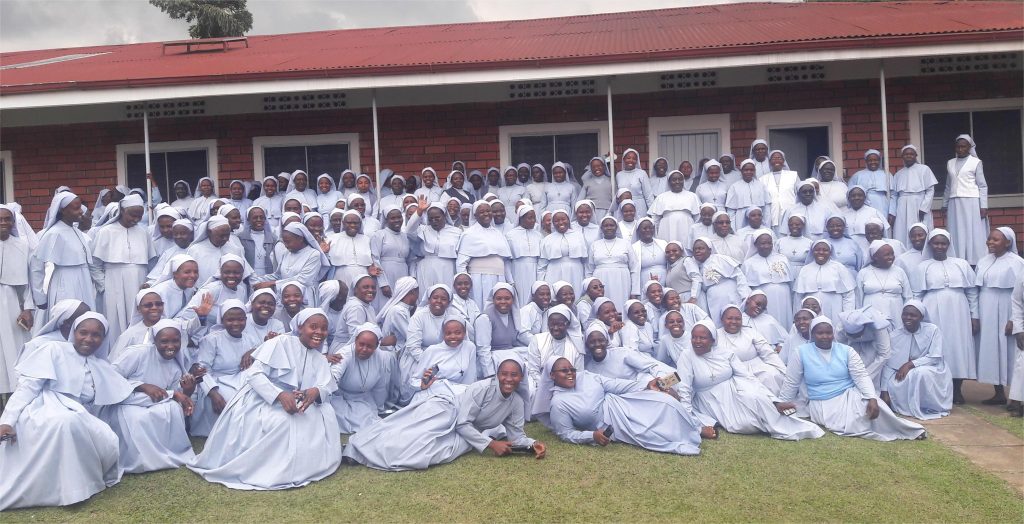
We are an institute of Diocesan Right, founded in Fort Portal Diocese, Uganda, East Africa, by the Right Reverend Francis Xavier Lacoursière. We live in Community whereby we share together our giftedness and our common goal. Our principal patroness is Saint Therese of the Child Jesus, patroness of missionaries. We cultivate a special devotion to her and imitate her faith, love, trust, humility and spirit of self-sacrifice. Currently we are serving in Uganda, Rwanda, Kenya, USA and Sudan.
Charism:
Spiritual Childhood — (By the life of St. Therese of the Child Jesus, Spiritual Childhood is marked by Love, faith, trust, simplicity and confidence in the Good Lord).
Motto:
Love God and Make Him loved. A motto we adopted from St. Therese.
Nature:
We are an Active Religious institute
Core Values:
Love, Trust, Humility, Simplicity, self- sacrifice and hospitality,
OUR MISSION
To evangelize
Mission Statement:
We, the Daughters of St. Therese of the Child Jesus are called to evangelize through Evangelical Ministries animated by Spiritual Childhood.
OUR VISION
A life giving religious community reflecting the kingdom of God.
10TH GENERAL CHAPTER THEME
Fostering a family spirit among the Daughters of St. Therese of the child Jesus animated by Love and Prayer
We evangelize through:
Active Prayer and Work
Teaching Catechism
Ministry to the family and the poor
Health Services
Teaching in Schools at all levels
Participating in various Economic, Social and Pastoral projects.
Special ministry to women, the Youth and the children
OUR PATRONESS SAINT THERESE OF THE CHILD JESUS
CONTACT US
Administration / Generalate
Daughters of St. Therese of the Child Jesus
(Banyatereza Sisters)
Administration House / Generalate – Virika
P.O. Box 370
Fort Portal, Uganda, East Africa
Telephone: +256 775 255942
Email address: dstsisters@gmail.com
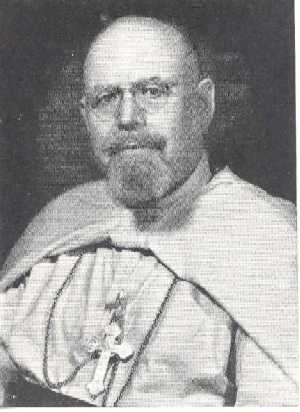
Bishop Francis Xavier Lacoursière
1885 – 1970
Bishop Francis Xavier Lacoursière‘s
motto was IN GOD I TRUST.
Every morning he used to sing a little song, “Lord, I want to see you, to love you more and more.”
Bishop Francis Xavier Lacoursière was born on 26th January, 1885 at Batiscan, a big village on the banks of the St. Lawrence, about 20 miles downstream from Trois-Rivières. This charming corner of the province opening on to the big river, the lively and happy family life, the ancestral traditions that the Lacoursières as good Canadians clung to, brightened and shone on the soul of the future missionary. All his life long, he was happy, full of zest, open and broad-minded.
The young Lacoursière studied with the Brothers of St. Gabriel at Batiscan, and at Montreal College. He did his theological studies at Quèbec Seminary. He received the religious habit on 3rd October, 1909 at Maison-Carrèe, and then left for Carthage where he made his oath on 27th June, 1912. He was ordained priest on 29th June, 1913.
In August 1913, shortly after his ordination he received his appointment for Northern Rhodesia (now Zambia). But the next day, Father Voillard, the Superior General, who used to put his letters in a pile and, unless it was urgent, answered them starting from the bottom. That day he drew out a letter from Uganda, from Mother Marie du Bon Secours of the Missionary Sisters of Our Lady of Africa (White Sisters), Fr. Lacoursière‘s own sister. She had preceded him by a few years to the missions. Fr. Voillard at once called the young missionary to ask if he would prefer to go to Uganda. That is how Fr. Lacoursière at the end of that same year found himself at Masindi, which by then was a station in the northern extremity of the huge Vicariate of Uganda, being directed by Bishop Streicher.
After six years of apostolic work in Masindi, Fr. Lacoursière was appointed to teach at Kisubi Seminary, and two years later, he was made rector of Nandere Seminary. It is certain that he had no taste for teaching. Since he loved any work necessary for the mission and since he gave himself to the utmost wherever he was, he met with nothing but success. Bishop Lacoursière preserved many a happy memory and lots of funny stories of his time as teacher, and he clearly liked telling them.
Fr. Lacoursière taught in schools for five years, and in 1926 the Vicar Apostolic appointed him to do parish work in Kabale. In 1928, he went back to Canada. There he was made superior of Everell, near Quèbec, where the aspirants of the Missionaries of Africa (White Fathers) began their theology before setting out to continue their studies and training in Algeria and Tunisia. His term as superior ended in 1934, when the Holy See recalled him to Africa to entrust him with the Vicariate Apostolic of Ruwenzori, split off from the huge Vicariate of Uganda. At that moment there were many people to be evangelized, few missionaries, and insufficient funds. Then the bishop turned to God and took as his motto: “In Domino Confido” (In the Lord I trust).
Fr. Lacoursière was consecrated bishop by Cardinal Villeneuve on 25th July, 1934, in the basilica of Quèbec, and celebrated his first pointifical Mass at the national shrine of St. Anne de Beauprè. Time was short, and since his family, relatives, and friends to be visited were numerous but scattered, he did not want to stay too long in Canada.
On 24th December, 1934, the new bishop was back in Uganda. Bishop Lacoursière entered his Vicariate from the northern districts of Bunyoro and Tooro, at night, and celebrated the Christmas vigil at Butiiti station. It would be impossible to keep track of all adventures in the life of the bishop of Ruwenzori, who in all kinds of weather had to travel around a territory spread over 400 miles on the bad roads of the time.
In the most annoying circumstances and difficulties, the bishop completely in control of himself, used to express his disappointment by saying, “that’s not allowed.” When everything went well, he sang with his fine deep voice the folklore songs of his country. He had a good memory for the many verses of these songs, whether happy or sad. The songs were interspersed with rosaries. It is certain that at the end of his life, he could have taken for his own the words of Field-Marshal Foch: “I don’t recall except once or twice having missed my rosary, even on the days of the big battles.” Like Cardinal Lavigerie, he reckoned he had never succeeded in doing anything except through the Blessed Virgin Mary. At any rate, he used to recite more than one rosary on the same trip. And then, if he had a companion, the songs and rosaries were interspersed with conversations always studded with captivating stories.
Bishop Lacoursière always prayed and sought advice before making major decisions. Even after years as a bishop, he didn’t hesitate to ask advice even of the youngest missionaries. Many times he went to Ibanda and then to Bwanda, where the ever clear-minded Bishop Streicher was living in retirement, in order to consult him on various questions.
In 1937 Bishop Lacoursière founded the congregation of the Daughters of Saint Theresa of the Child Jesus to assist in spreading the mission of evangelization, guided by the spirit of St. Theresa of Lisieux; the spirit of spiritual childhood. The bishop’s aim was to teach religion to all people in the area where the congregation was founded and beyond.
In addition to evangelical work, Bishop Lacoursière put schools as one of the priorities to be realized. He had called into the Vicariate the Sisters of Notre Dame du Bon Consiel of Chicoutimi, to support in the field of teaching, the White Sisters, and the Brothers of Christian Instruction already at work for a long time in the same area.
Bishop Lacoursière was an optimist all his life. One day, a missionary, knocking at the bishop’s door, thought he had been told to come in, he opened the door unexpectedly, only to find his bishop in tears on his knees. But he kept his worries to himself. He didn’t ask his missionaries to bear them. If he informed them about the dilemmas facing the Vacariate from the point of view of personnel, evangelization, finance and so on, he did not overwhelm them with these points.
The bishop always kept the door open to hope. He encouraged, spurred on, but never hurt or humiliated anyone. He could ask for any sacrifice, since he practiced what he preached. He was one of those rare individuals who never spared himself day or night, but did not demand that others do likewise. He had a good heart, which never knew any bitterness. For each and everyone, Bishop Lacoursière was a father. You could come to him angry, bitter, but you went away serene, and usually with a gift. He put his car at the disposal of his priests so that they could do their work without trouble. His generosity was boundless. One of the big problems that Bishop Lacoursière had to face was that of finding the necessary funds. As long as his father was alive, he often appealed for his help, “to save the family honour” as he put it. But the paternal wallet was not inexhaustible.
To save money and personnel, Bishop Lacoursière never wanted to have a full time secretary, except during the last months of his administration. Many times he went to bed late drafting letters and keeping up-to-date with his voluminous correspondence. In spite of everything, the bishop was always open-hearted and he liked community life. When he was expected at a church station, his visit was a comfort and relaxation. Amid serious matters, he knew how to fit in a good game of bridge, a playful conversation, or the story of one of his many adventures, into any free moments.
Under the direction and impulse of Bishop Lacoursière, the Vicariate of Ruwenzori developed rapidly. All the stations were overwhelmed with work. Even small parishes had up to one thousand adult baptisms a year. In 1953, the ecclesiastical hierarchy was set up in Uganda, and the Vicariate of Ruwenzori became the diocese of Mbarara. Bishop Lacoursière remained in charge until 1955. Then, worn out, he sent in his resignation to the Holy Father, and went to Canada for cancer treatment. After two years of medical care and some rest, the bishop was back in Uganda, to found a new mission station of Kagamba. The bishop was very happy at finishing the Church at Kagamba in time before going to assist at the White Fathers’ Council. When he came back to Uganda, he stayed at the neighbouring station of Lwera, where he could be of service by doing the daily work of the station. Yet Lwera did not have the conveniences he had given to Kagamba.
A great consolation for Bishop Lacoursière in the last years of his life was to see the diocese of Mbarara split up in rapid stages, into four dioceses (Hoima, Fort-Portal, Kabale, Mbarara), each headed by an African bishop, except Fort-Portal, where the African bishop was auxiliary.
After having lived as a man of steadfast faith and inexhaustible charity, Bishop Lacoursière left peacefully for eternity. He who had so often taken care of others needed no care for himself. He who prayed so much died while praying. On Sunday, 15th March, 1970, he had got up early as always, beaten the drum to awaken the others. Then he had gone to church to pray. Back in his room, he prepared for the 8 o’clock Mass that he was to say. As he was late, a priest went to his room and found him sunk deep in him armchair, a prayer book on his knees. The little song he used to sing every morning: “Lord, I want to see you, to love you more and more,” was realized in a wonderful way. He began his last morning like so many others by rendering serving, and died shortly afterwards as he had foreseen: “One find morning you are not there anymore.” He died at the age of 85; and was buried at Nyamitanga, Mbarara diocese, Uganda.
Bishop Lacoursière was a living image of Christ, a man for God and for others, who gave and forgave always, and started again each time with an invincible faith and hope. His love for the Church, his humility, his sense of obedience, his fidelity, and his charity towards everyone remain as a call to always do better.
Fr. Ulric Beauchamp, M.Afr.
Fr. Ulric Beauchamp, M.Afr. was Co-Founder and first principal teacher of the congregation of the Banyatereza Sisters. He emphasized the sanctification of the present moment, as an essential element of the members’ spiritual life. He had love and zeal for souls, prayer, and hard work. Fr. Ulric, because of accepting suffering found in pastoral actives, left a motto: “Let suffering and pain be there but love it.” Fr. Beauchamp died on 11th July 1953. He was buried at Virika in the Parish Cemetery.
THE DAUGHTERS OF SAINT THERESE OF THE CHILD JESUS (BANYATEREZA SISTERS)
We are a religious Institute founded in Fort Portal, Uganda, in 1937, by the Missionaries of Africa, the Right Rev. Francis Xavier Lacoursiere and Fr. Ulric Beauchamp as co-founder and principal teacher. We have St. Therese of the Child Jesus as our Patron saint thus; we are called the Daughters of Saint Therese of the Child Jesus. We were founded to take part in the mission of Christ that of spreading the Good News of Christ to all people we work with in our various ministries. “Let the good news be proclaimed to all” are the words of the Co-founder which resonate with some of Jesus’ words: “… to the other towns also I must proclaim the good news of the Kingdom of God because for this purpose I have been sent” (Luke 43-44). “… I have come so that they might have life and have it more abundantly (Jn 10:10). “The Spirit of the Lord is upon me, because he has anointed me to bring glad tidings to the poor. He has sent me to proclaim liberty to captives and recovery of sight to the blind, to let the oppressed go free and to proclaim a year acceptable to the Lord (Lk 4:18-19). This mission we fulfil mainly by living a prophetic life showing that Christ is still alive today and shows (Com)passion for humanity in their suffering and indifference. In this way we are called to “Be other Christs” as we emulate His sentiments and witness this by living our Baptismal and Religious Consecration. In other words, we strive to be a life-giving community reflecting the Kingdom of God as we try to live a life of communion modelled on the Triune God and the Holy Family of Nazareth. By living both Contemplative and Apostolic ways of life we unite ourselves to God seeking to deepen our intimate relationship with Christ. We reciprocate God’s love for us with love of the other near and far directing them to their creator. We do this being animated by Spiritual Childhood, the little way of our patroness, which is marked by complete trust in the loving God, recognizing that without His help we can do nothing (Cf. Jn 15:5).
In our contemplative aspect, we are guided by the Spirituality of St. Ignatius of Loyola. Each member is called do her best in the sanctification of the present moment, being helped by the actual grace that God gives particularly for that moment. Everything is done out of the love of God for the sanctification of self and for the salvation of souls. (“My Jesus, I do this for love of you”). This is the source of strength for ministry in the apostolate aspect of our Religious calling. (From the feet of Jesus to service).
By living the three evangelical Counsels of Chastity, Poverty and Obedience we live in community and celebrate life together as one family and also reach out to God’s people being guided by Hospitality, Simplicity, Humility, Sense of belonging and Readiness to do God’s will as the principle virtues.
In carrying out our various ministries we recognize that we are a part of Christ ‘s Body, the Church, thus we adhere to Her Hierarchical and Magisterial orderings while at the same time considering ourselves, a system as an institute, with each member entrusted with authority for service at a particular level. The Law of the Church and the Proper Law are our rule of life as we live this communion.
We participate in the mission of the Church and follow the example of our Patroness St. Therese of the Child Jesus by praying for and working with people from all walks of life both near and far according the Church’s needs of the time; with the vision of becoming a life-giving Community reflecting the Kingdom of God. Our ministry is shaped by the words of our Founder and Co-founder “Let the Good News be proclaimed to all”. This Good News is Jesus Christ who must be recognized and loved by all people.
Despite our primary work being teaching catechism, we have also moved into other areas of development as a response to the need to form a whole person, who not only has a spirit but also a body, both of which are important.
LEADERSHIP TEAMS
The first General Chapter of the institute was held in August 1968. At this time the first African Superior General, Mother Theodosia Tibananuka was elected. She was assisted by the following sisters:
Sr. Rose Tindigwihura …………….. Vicaress
Sr. Immaculate Atwooki ………….. Councilor
Sr. Margaret Maria ………………… Councilor
Sr. M. Specioza ……………………. Councilor
Mother Theodosia and her Council took full responsibility for the self governance and administration of the Congregation from 1968 to 1974. Since 1968, members of the successive general chapter have erected superiors general and their council members every six years.